


Why Correct Jump Rope Length Matters
Getting the correct jump rope length is more important than most people realize. The right size directly affects your speed, form, and overall performance. A rope that’s too long will slow you down and create extra slack, forcing you to use unnecessary effort and breaking your rhythm. On the other hand, a rope that’s too short can cause you to trip, miss jumps, and strain your posture.
A good rope length should match both your height and skill level.
- Beginners often benefit from a slightly longer rope, giving them more clearance and time to react.
- Intermediate and advanced jumpers usually prefer shorter ropes for faster rotations and better control, especially for speed work or double unders.
Using the wrong size rope has clear downsides:
- Reduced workout efficiency and slower progress
- Increased risk of hitting your feet or shins
- Poor body alignment and unnecessary strain on shoulders and wrists
In short, the rope length you choose sets the foundation for comfort, speed, and consistency every time you jump.
Understanding Jump Rope Length Measurements
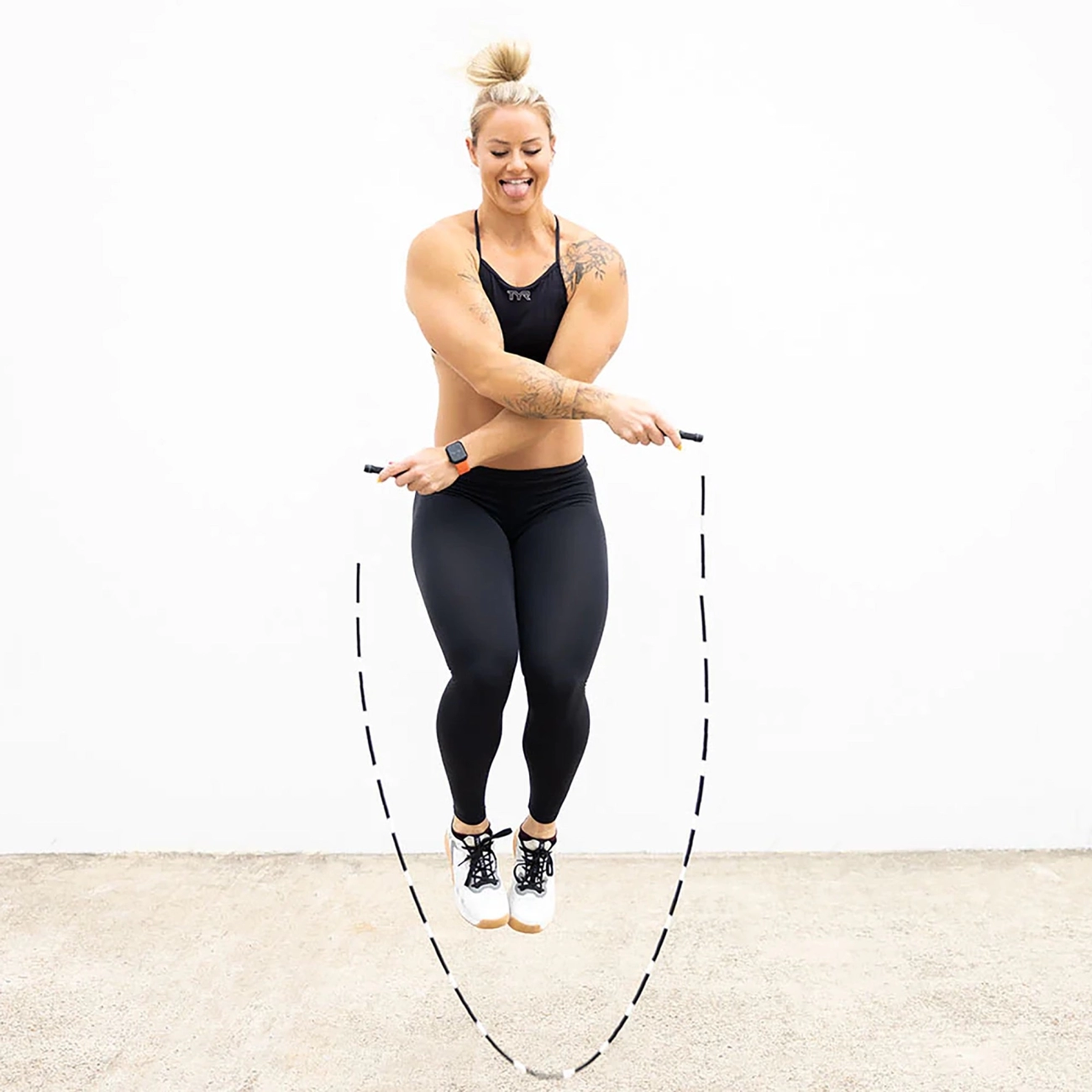
When figuring out how to measure jump rope length, it helps to understand how ropes are sized and why different types have different length preferences.
Standard Jump Rope Length Ranges
Most jump ropes for adults fall between 8 feet and 10 feet in length. Shorter ropes are used for kids or advanced speed work, while longer ones are better for beginners who need more clearance.
Typical size ranges:
| Skill Level / Use | Rope Length Range | Notes |
|——————————|————————–|——-|
| Kids | 7 ft – 8 ft | Lighter, easier to control |
| Average Adult (5’0”–5’8”) | 8 ft – 9 ft | Good balance of speed and space |
| Tall Adult (5’9”–6’3”) | 9 ft – 10 ft | Extra clearance |
| Advanced Speed Jumping | Shorter than standard | For faster rotations |
| Tricks and Freestyle | Slightly longer than standard | Helps with crossovers and wraps |
Common Units of Measurement
Jump ropes are usually measured in:
- Inches (most U.S. buyers prefer this)
- Feet (easiest to picture for body height)
- Centimeters (common for international charts)
- Meters (used in competitive jump rope specs)
Rope Styles and Preferred Lengths
Different rope types work best with certain lengths:
- Classic PVC Rope – Slightly longer for rhythm and comfort; ideal for general fitness and beginners.
- Speed Rope – Shorter and tighter for quicker rotations, like our Speed Jump Rope, popular for CrossFit and double unders.
- Weighted Rope – May run a touch longer for stability and smooth swing, often used for strength and endurance workouts.
Step by Step Guide How to Measure Your Jump Rope Length
Method 1 Measuring Using Your Height
One of the easiest ways to figure out the correct jump rope length is by using your height.
- For beginners – Rope length should be your height × 1.0 to 1.1 (slightly longer for better control).
- For advanced jumpers or speed work – Rope length can be closer to your height × 0.95 to 1.0 for faster rotations.
Recommended Jump Rope Length by Height
| Your Height (ft/in) | Rope Length (ft) |
|---|---|
| 4’10” – 5’0” | 8’0” |
| 5’1” – 5’3” | 8’2” |
| 5’4” – 5’6” | 8’4” |
| 5’7” – 5’9” | 8’6” |
| 5’10” – 6’0” | 8’8” |
| 6’1” – 6’3” | 8’10” |
| 6’4”+ | 9’0”+ |
Tip: Always round up slightly if you’re still getting used to jumping.
Method 2 Using a Measuring Tape or Ruler
If you have your rope in hand, you can measure the actual cable length:
- Lay the rope on a flat surface, straightened out.
- Measure from one end of the handle grip to the other excluding most of the handle length (measure the cable length, not the full handles).
- Adjust to fit your preferred length—most adjustable ropes have a screw or clip system at the handle.
- Mark the spot before cutting or trimming to avoid mistakes.
How to Adjust Your Jump Rope Length
Adjusting your jump rope length is simple, but it’s worth taking a few minutes to do it right so you get the best feel and performance.
Shortening Your Rope
For most adjustable jump ropes, you can make it shorter without tools or with minimal effort:
- Open the handle caps (if your rope has removable ends).
- Slide the rope through the locking mechanism to your desired length.
- Tighten it back in place.
- Test it before cutting. If you decide to trim, leave an extra inch as a safety margin.
Lengthening Your Rope
If your rope is adjustable, simply release the locking mechanism and pull more rope through.
- For fixed-length ropes, you’ll likely need to replace the cord with a longer one or buy a new rope.
Tips for Cutting and Securing
- Use sharp scissors or wire cutters for clean cuts.
- Melt PVC rope ends slightly with a lighter to prevent fraying.
- If your rope doesn’t have a clamp or screw lock, you can tie a secure knot inside the handle to shorten it temporarily.
When to Get Professional Help or a Custom Rope
Choosing the Right Rope Length for Different Jump Rope Activities
The ideal jump rope length can change depending on the type of workout you’re doing. Here’s a quick guide:
Basic Jumping
For casual cardio or warm-ups, choose a rope length that allows the handles to reach your armpits when you stand on the middle of the rope. This gives a comfortable pace without tripping.
Speed Jumping
Speed ropes should be shorter for quicker rotations—handles should come up to mid-to-upper chest when measured the same way. Too long and you’ll lose momentum.
Double Unders
For CrossFit or advanced training, the rope should be 2–6 inches over your head during use. This length offers enough clearance for fast double rotations without excessive slack.
CrossFit and High Intensity Workouts
Use a length similar to double unders or slightly shorter. Quick turns plus consistent speed are key, so trim any extra rope that slows you down.
Tricks and Freestyle Jumping
For moves like crossovers, side swings, and releases, you’ll want a slightly longer rope—usually 4–10 inches over your head—to give space for freestyle flow.
| Activity Type | Recommended Rope Length Guide |
|---|---|
| Basic Jumping | Handles to armpits |
| Speed Jumping | Handles to mid-to-upper chest |
| Double Unders | 2–6 inches over head |
| CrossFit/HIIT | Same as double unders or slightly shorter |
| Tricks/Freestyle | 4–10 inches over head |
Common Mistakes When Measuring Jump Rope Length and How to Avoid Them
When figuring out the correct jump rope length, a few common mistakes can throw off your measurements and affect your workout.
1. Ignoring Rope Thickness and Handle Size
Not all ropes are the same. Thick ropes, beaded ropes, or ones with extra-long handles can affect how the rope moves and feels. If you only measure the cable and ignore handle length, your rope may feel too short or too long in use. Always factor in handle size when measuring.
2. Forgetting About Footwear and Surface
Your shoes and the floor you jump on make a difference. For example, cushioned running shoes lift you higher off the ground than flat trainers. Jumping on a mat or gym floor also changes rope clearance. Measure your rope while wearing the shoes you normally jump in on the surface you train on.
3. Using Inaccurate Measuring Tools
A stretched-out tape or a rough guess with no measuring tool can lead to the wrong size. Always use a reliable measuring tape or ruler for accurate results. If you don’t have one, use the “stand-on-the-middle, pull-up” body method, but make sure your form is correct.
FAQs About Jump Rope Length
What if I’m between sizes?
If your height falls between two measurements on a jump rope length chart, it’s better to start with the longer option. You can always shorten the rope later, but you can’t make it longer once it’s cut. An adjustable jump rope is also a safe choice if you want flexibility.
Can jump rope length vary for different exercises?
Yes. For basic cardio or casual skipping, a slightly longer rope can be more forgiving. For speed jumping, double unders, CrossFit, or freestyle tricks, most athletes prefer a shorter rope for faster rotations and better control.
How do I know if my rope length is incorrect during use?
Your rope is too long if it’s hitting the ground far in front of you or slapping the floor too much. If it’s too short, you’ll feel crowded, catch your feet often, or have to jump higher just to clear the rope. Proper length should let the rope skim the ground lightly under your feet without forcing awkward posture or extra effort.
Why Choose JumpRopeSupplier for Your Perfect Jump Rope
At JumpRopeSupplier, we know that the right rope length makes all the difference in performance, comfort, and safety. As a professional jump rope manufacturer and supplier, we’ve worked with athletes, fitness enthusiasts, and gyms across the U.S., providing ropes tailored to their exact needs.
Our Expertise
- Years of experience producing PVC, beaded, speed, and weighted jump ropes.
- Knowledge of sport-specific rope lengths for CrossFit, boxing, freestyle, and general fitness.
- OEM/ODM manufacturing for gyms, teams, and brands.
Custom Sizing Options
We don’t believe in “one-size-fits-all.” Whether you’re a beginner or an advanced jumper, we can:
- Cut and assemble your rope to the exact length you need.
- Recommend rope styles and thickness based on your workout.
- Offer adjustable ropes so you can fine-tune your fit.
Quality Assurance and Support
- Built from durable materials for long-lasting use.
- Each rope is tested for weight balance, smooth rotation, and reliable handles.
- Fast U.S. shipping and a dedicated team to answer your questions.
How to Get Personalized Advice
Need help figuring out your correct jump rope length?
- Visit our PVC Jump Rope page to explore options.
- Contact us directly with your height, workout style, and preferences—we’ll match you to the ideal rope.
- We also offer wholesale supply for gyms and training facilities.
 English
  Vietnamese
  German